Friday, January 19, 2024

Protecting Your Cryptocurrency from Hackers in 2023: A Guide

HOW TO PROTECT CRYPTOCURRENCY FROM HACKERS IN 2023

HOW TO PROTECT CRYPTOCURRENCY | Let’s learn
how to take precautions from crypto scammers &
fake cryptocurrency websites in 2023.


How to protect cryptocurrency

HOW TO TAKE PRECAUTIONS FROM CRYPTO SCAMMER

If you
really want to protect your
valuable cryptocurrency from scammers
then you have to read the full
article and be alert always, because nowadays crypto scammers are using the latest technology to hack your digital
currency.

With
the promise of decentralized and transnational transactions, cryptocurrencies
have upended established banking systems.

While
there is the potential for substantial rewards, it is critical to address the
issue of phony cryptocurrency investment sites that prey on those anxious to
enter the market.

Are there fake cryptocurrencies?

Yes, There
are fake cryptocurrencies, that much is true. False cryptocurrencies, often
known as “scam coins” or “shitcoins,” have been a recurring
issue in the cryptocurrency sector, which is not immune to fraudulent conduct.
The purpose of these fraudulent cryptocurrencies is to trick and con unwary
investors.

Here are some common ways in which fake
cryptocurrencies operate:

Ponzi Schemes: Some
fraudulent cryptocurrencies function as Ponzi schemes, paying rewards to early
investors with the money of new investors. When there are not enough new
investors to cover the rewards, these schemes fail, causing significant losses
for latecomers.

Exit Scams: Some
cryptocurrency initiatives claim cutting-edge technology or substantial rewards
when they are first introduced. But after receiving a sizeable investment, the
founders vanish with the money, leaving investors with useless tokens.

Clone Coins: Scammers
may create digital currencies that closely resemble well-known and reliable
ones. These fictitious coins are intended to mislead investors into purchasing
the incorrect digital asset.

Fake ICOs: Initial
Coin Offerings (ICOs) are a well-liked means of raising money in the
cryptocurrency industry. Scammers have run fraudulent ICOs to lure investors
into buying tokens that have no real value or connection to actual projects.

Exercise
caution while investing in cryptocurrencies, and do your homework before you
do so to safeguard yourself from scammers. Here are some pointers to help you
steer clear of con artists:

Research: The
cryptocurrency initiative, its personnel, and its technology should all be
investigated. Look for a whitepaper that is clear and well-supported.

Regulatory Compliance: Make sure that the project complies with all applicable laws and, if needed, that it has
the required licenses.

Community Feedback: Get
opinions and insights on the project by reading reviews and interacting with
the Bitcoin community.

Use Reputable Exchanges: Trade
and buy cryptocurrencies on trustworthy, well-known exchanges that investigate
the listed tokens.

Beware of Unrealistic Promises: Investments
that claim large returns with little to no risk should be avoided. It’s usually
true if something sounds too wonderful to be true.

Secure Wallets: Store
your valuables in safe Bitcoin wallets, and for further security, install
security features like two-factor authentication (2FA).

Are the Fake Crypto Investment Sites?

One
issue looms large in the constantly changing world of cryptocurrencies:
“Are the fake crypto investment sites?” An increase in fraudulent
schemes trying to take advantage of unwary investors has coincided with the
rise in the popularity of cryptocurrencies like Bitcoin and Ethereum.

In this
thorough post, we’ll delve into the realm of fraudulent cryptocurrency
investment sites, examine the dangers they provide, and give you insightful
tips on how to be safe in the cryptocurrency market.

Understanding the Allure of Cryptocurrency
Investments

The
draw of investing in cryptocurrencies is their potential for large returns,
which frequently exceed those of traditional assets. Cryptocurrencies provide
financial inclusion and a rival to established banking institutions. However,
this particular attractiveness draws con artists who want to take advantage of
the absence of regulation in the cryptocurrency industry.

THE
PROLIFERATION OF FAKE CRYPTO INVESTMENT SITES

Identifying Unrealistic Promises

False
cryptocurrency investing sites sometimes make grandiose guarantees of enormous
profits with little to no risk. This is a classic cautionary sign because all
investments involve some risk, particularly in the erratic world of
cryptocurrency.

Lack of Regulatory Oversight

Genuine
cryptocurrency investing platforms follow legal requirements to safeguard
investors’ interests. Contrarily, fraudulent websites operate illegally,
without the necessary permits and regulatory compliance, endangering your
investments.

Poor Website Design and Functionality

Scammers
may use poor-quality graphics, misspellings, and broken links while designing
websites. Reputable cryptocurrency platforms make investments in intuitive user
interfaces, demonstrating their dedication to the user experience.

The Consequences of Falling for Fake Sites

Protecting Your Cryptocurrency from Hackers in 2023: A Guide appeared first on newsfox1188.com.


source https://newsfox1188.com/protecting-your-cryptocurrency-from-hackers-in-2023-a-guide-2/?utm_source=rss&utm_medium=rss&utm_campaign=protecting-your-cryptocurrency-from-hackers-in-2023-a-guide-2

Thursday, January 18, 2024

The Potential Impact of AI on the Travel Industry in 2024

It is hard to believe that it has only been about a year since travelers started dabbling in ChatGPT-created itineraries. This year will bring even more experimentation and innovation. “A.I. is like a teenage intern,” said Chad Burt, co-owner of the travel adviser network Outside Agents, “better, smarter, faster than you, but you need to lead them.”

The expanding use of A.I. could influence how we book online, what happens when flights are canceled or delayed, and even how much we pay for tickets.

“In 2024, we will see a new breed of intelligent travel agents built on top of chatbots,” said Oren Etzioni, professor emeritus of computer science at the University of Washington. That means travelers will begin interacting with sites like Airbnb, Expedia and Priceline by typing out questions in addition to ticking boxes to search for lodging, restaurants and amenities like swimming pools.

A.I. will also power what happens behind the scenes at airlines and airports, said Gilbert Ott, director of partnerships at Point.me, which helps travelers find flights to buy with rewards points. For example, it could improve automatic rebooking onto new flights when customers miss connections or weather snarls runways. At United Airlines, for example, smarter software can offer rebooking options and issue food and lodging vouchers when a flight is canceled, rather than just rebooking a flight.

On the ground, A.I. software will be able to inform more human-made decisions, like how to most efficiently reposition baggage carts and staff in response to tight connections or flight delays.

Finally, A.I. systems trained on bigger and more up-to-date data sets will let airlines’ dynamic ticket-pricing algorithms better use data like weather predictions and customers’ searches to charge as much as they can while still filling planes. At the same time, companies like the online travel agency Hopper, which says it uses 70 trillion data points in its pricing prediction model, continue to work the problem from the other side, in a kind of A.I.-powered arms race between the airlines and customers.

The post The Potential Impact of AI on the Travel Industry in 2024 appeared first on newsfox1188.com.


source https://newsfox1188.com/the-potential-impact-of-ai-on-the-travel-industry-in-2024/?utm_source=rss&utm_medium=rss&utm_campaign=the-potential-impact-of-ai-on-the-travel-industry-in-2024

Report: Students in schools with unsafe concrete need exam assistance, states RAAC

The Bishop Wilkinson Catholic Education Trust said it had received “minimal extensions to coursework” and, in a formal request to the DfE, said: “Just because there is no current provision within our examination system for individual schools in this unique situation, does not mean there should not be.”

Nick Hurn, its chief executive, said: “The stance that the DfE, Ofqual and JCQ continue to parrot – that students won’t be given any additional consideration outside of the current framework – is just not credible, reasonable or just.

“Now we have irrefutable evidence that our children’s exam chances have been severely affected by this situation caused by the Raac.”

He said ministers intervened after Covid hit – and this situation was “far more disruptive”.

Mr Hurn added that he did not expect Ofqual to allow teachers to assess grades – which happened when exams were cancelled in 2020 and 2021 – but did want a “fair and appropriate level of consideration”.

Mary Kelly Foy, Labour MP for City of Durham, said she was seeking “genuine commitments” from ministers.

“The inability of the DfE, Ofqual and examinations boards to grasp the severity of this situation… is a catastrophic failure of all of those involved in making decisions thus far,” she said.

Unsafe buildings at St Leonard’s are due to be demolished this year, according to the report – but rebuilding work “will take time”.

A total of 231 schools in England were confirmed to have Raac in the most recent government list issued last month – but that list could continue to grow.

At some schools, students have been unable to access design and technology work rooms, laboratories and other specialist spaces since September.

Prof Stephen Gorard, one of the report’s authors, said: “The emphasis has rightly been on practical and lab-based subjects.”

But he said other subjects have been affected at St Leonard’s because teaching materials were abandoned when classrooms closed at short notice, adding: “Even lessons in English literature were thrown by not being able access any of the planned texts.”

The post Report: Students in schools with unsafe concrete need exam assistance, states RAAC appeared first on newsfox1188.com.


source https://newsfox1188.com/report-students-in-schools-with-unsafe-concrete-need-exam-assistance-states-raac/?utm_source=rss&utm_medium=rss&utm_campaign=report-students-in-schools-with-unsafe-concrete-need-exam-assistance-states-raac

Nikki Haley Intensifies Her Criticism of Trump in New Hampshire

Nikki Haley is focused on campaigning in New Hampshire ahead of its first-in-the-nation primary next week. While she may have come in third in the Iowa caucuses, her attention is on only one rival: Donald J. Trump.

Ms. Haley, a former South Carolina governor and U.S. ambassador to the United Nations under Mr. Trump, has begun refining her attack on the former president. She has launched a new attack ad and announced that she would no longer participate in primary debates that don’t include him.

She has criticized Mr. Trump and President Biden as politicians past their prime who are unable to put forth a vision for the country’s future and are “consumed by the past, by investigations, by grievances.”

However, she clarified that she would not attack him personally in a CNN interview, stating that she just discusses policy. She also notes that she has not ruled out running as his vice president and does not talk about his criminal charges.

While Ms. Haley competes heavily in New Hampshire, Mr. Trump continues to hold leads in both states and his hold on Republican voters is overwhelming. His campaign has been attacking Ms. Haley, sharing emails with negative subject lines about her and attacking her track record as governor.

Despite this, Ms. Haley has remained composed in her responses to Mr. Trump’s attacks and continues to work towards securing enough support in Iowa and New Hampshire to put her in a position to compete with Mr. Trump in South Carolina.

Democrats have been hitting Ms. Haley as well, pointing to her conservative policies as a sign that she is part of the same controversial Republican wave as Mr. Trump.

Neil Vigdor contributed reporting from Bretton Woods, N.H.

The post Nikki Haley Intensifies Her Criticism of Trump in New Hampshire appeared first on newsfox1188.com.


source https://newsfox1188.com/nikki-haley-intensifies-her-criticism-of-trump-in-new-hampshire/?utm_source=rss&utm_medium=rss&utm_campaign=nikki-haley-intensifies-her-criticism-of-trump-in-new-hampshire

Wednesday, January 17, 2024

The Pacific Northwest Prepares for Additional Freezing Rain, Ice, and Snow after Recent Storms

Parts of the Northwest were suffering from a brutal weather pattern this week, with a mix of wintry precipitation and frigid temperatures causing power outages in Oregon, and the state’s governor declaring a state of emergency for at least one county. And forecasters are warning the misery is not over yet.

As of early Wednesday, nearly 90,000 customers in Oregon were without power, mostly in the western half of the state, according to PowerOutage.us, which aggregates data from utilities across the country. The majority of outages were reported in Lane County, where Gov. Tina Kotek on Tuesday issued an emergency declaration.

“Lane County has suffered extensive damage as a result of the winter storm conditions that we’re seeing across Oregon,” Ms. Kotek said in a statement, according to KGW8, a local news outlet. The declaration will help the county gain access to federal resources.

In its own emergency declaration, the Lane County Board of County Commissioners cited severe damage — widespread power outages, road closures, downed trees and power lines — caused by an ice storm. Lingering temperatures below freezing, which poses heath risks to residents, has also created challenging travel conditions for emergency medical workers, the commissioners said.

Several other surrounding counties, including Washington County, have also issued local emergency declarations.

There are no signs of improvement in the immediate forecast across the Pacific Northwest, according to the National Weather Service.

More than three million people in northwest Oregon were under an ice storm warning Wednesday, while more than 12 million from Washington to eastern Montana, and as far south Colorado, were under a winter weather advisory.

Weather Service forecasters were tracking a system Wednesday responsible for bringing significant freezing rain to the Portland area. The system was expected to taper off by the morning, with a high chance of ice accumulation. It will then spread heavy mountain snow across the interior Northwest. The Cascades and Northern Rockies could see moderate to major winter storm effects.

A second storm system will then quickly settle over the area, directing another round of Pacific moisture on both Thursday and Friday.

Much of the United States and Canada have experienced a frigid and dangerous start to the year because of inclement weather. Wind chill readings fell substantially below zero in some cities over the holiday weekend. In the Northwest, strong winds knocked down trees, crushing homes, cars, and other property. The storm is being blamed for at least nine deaths — from falling trees, fire or hypothermia — in the Portland area, according to The Oregonian.

The post The Pacific Northwest Prepares for Additional Freezing Rain, Ice, and Snow after Recent Storms appeared first on newsfox1188.com.


source https://newsfox1188.com/the-pacific-northwest-prepares-for-additional-freezing-rain-ice-and-snow-after-recent-storms/?utm_source=rss&utm_medium=rss&utm_campaign=the-pacific-northwest-prepares-for-additional-freezing-rain-ice-and-snow-after-recent-storms

Decline in Cancer Deaths, but Possible Caveats

Cancer deaths in the United States are falling, with four million deaths prevented since 1991, according to the American Cancer Society’s annual report.

At the same time, the society reported that the number of new cancer cases had ticked up to more than two million in 2023, from 1.9 million in 2022. Cancer remains the second leading cause of death in the United States, after heart disease. Doctors believe that it is urgent to understand changes in the death rate, as well as changes in cancer diagnoses.

The cancer society highlighted three chief factors in reduced cancer deaths: declines in smoking, early detection and greatly improved treatments.

Breast cancer mortality is one area where treatment had a significant impact.

In the 1980s and 1990s, metastatic breast cancer “was regarded as a death sentence,” said Donald Berry, a statistician at the University of Texas MD Anderson Cancer Center and an author of a new paper on breast cancer with Sylvia K. Plevritis of Stanford University and other researchers (several authors of the paper reported receiving payments from companies involved in cancer therapies).

The paper, published Tuesday in JAMA, found that the death rate from breast cancer had fallen to 27 per 100,000 women in 2019 from 48 per 100,000 in 1975. That includes metastatic cancer, which counted for nearly 30 percent of the reduction in the breast cancer death rate.

Breast cancer treatment has improved so much that it has become a bigger factor than screening in saving lives, said Ruth Etzioni, a biostatistician at the Fred Hutchinson Cancer Center.

Death rates have even declined among women in their 40s, who generally did not have regular mammograms, said Dr. Mette Kalager, a professor of medicine at the University of Oslo and Oslo University Hospital, “indicating a substantial effect of treatment,” she said.

“The biggest untold story in breast cancer is how much treatment has improved,” said Dr. H. Gilbert Welch, a cancer epidemiologist at Brigham and Women’s Hospital. “This is unambiguous good news.”

The American Cancer Society found increases in the incidences of many cancers, including cancers of the breast, the prostate, the uterus, the oral cavity, the prostate, the liver (in women but not men), the kidney, and the colon and rectum in middle-aged adults. Melanoma incidence also increased. The numbers were adjusted for changes in the size of the population.

Dr. William Dahut, chief scientific officer of the cancer society, said that while the overall rate of colorectal cancer had continued to decline, he was concerned about an increase in one group: people under age 55. In those younger people, the society reports, the incidence is now 18.5 per 100,000 and has been rising by 1 percent to 2 percent a year since the mid-1990s, with 30,500 people expected to be diagnosed this year.

In the late 1990s, colorectal cancer was the fourth leading cause of death for people younger than 50. Now it is the leading cause in men under 50 and the second leading cause in women. Doctors cannot say why.

“We don’t have a good explanation,” Dr. Dahut said. “We do a lot of hand waving. Is it diet? Is it obesity? Is it something in the environment? Is it in utero exposure?”

But colorectal cancer remains overwhelmingly a cancer of older people — among whom, in those over age 65, it has been declining by 3 percent a year, the cancer society says. Its incidence is now 155.4 per 100,000, with 87,500 people expected to be diagnosed this year.

Cancer researchers say that the more you look for cancer, the more you find. As screening becomes increasingly sensitive, doctors are discovering more and more cancers.

That sounds like a good thing — wouldn’t it be best to remove cancers before they become dangerous? The problem is that sometimes treatment might be unnecessary, because not every cancer will be life-threatening or even noticeable. Some cancers never spread. Others actually go away. Others might eventually have had a fatal result, but a person dies of something else first. But it can be impossible to tell the harmless cancers from the deadly ones, so all are treated.

The situation is called overdiagnosis, but no one can precisely say how often it occurs. With mammography, Dr. Berry said, estimates of overdiagnosis range from 0 to 50 percent.

“Increases in incidence are always concerning at first glance, but we need to understand why they are occurring because they may be an artifact,” Dr. Etzioni said.

That is the challenge facing cancer researchers now.

The post Decline in Cancer Deaths, but Possible Caveats appeared first on newsfox1188.com.


source https://newsfox1188.com/decline-in-cancer-deaths-but-possible-caveats/?utm_source=rss&utm_medium=rss&utm_campaign=decline-in-cancer-deaths-but-possible-caveats

Trump Indicates Intent to Pursue Intelligence Community in Document Case

In court papers filed on Tuesday night, lawyers for former President Donald J. Trump stated their intention to make accusations of bias against Mr. Trump a central part of their defense against charges that he illegally held onto classified documents after leaving office.

They also indicated that they planned to defend Mr. Trump by attempting to prove that the investigation of the case was politically motivated and biased.

The court papers, filed in Federal District Court in Fort Pierce, Fla., provide insight into the legal strategy Mr. Trump intends to use in fighting the classified documents indictment handed up over the summer.

While the 68-page filing was formally a request by Mr. Trump’s lawyers to the office of the special counsel, Jack Smith, for more information to help them fight the charges, it often read more like a list of political talking points than a brief of legal arguments.

The lawyers for Mr. Trump expressed their intent to portray Mr. Trump as a victim of the spy agencies and collusion between the Biden administration and prosecutors in the cases he faces.

The nation’s spy services are central to the case, as intelligence officials are likely to testify at trial about their assessments of the classified documents Mr. Trump is accused of removing from the White House.

Mr. Trump’s legal team has persistently derided all of the cases he is facing as partisan attacks against him as he mounts his third bid for the presidency.

The indictment alleges that the documents Mr. Trump took with him are related to nuclear secrets and military plans against U.S. adversaries.

Mr. Trump’s legal team also asked for information about potential bias or political animus toward President Trump by the prosecution team, as well as communications with the White House and local prosecutors in Georgia.

The filing also sought additional information about a security clearance from the Energy Department that Mr. Trump maintained after leaving office, which could help Mr. Trump defend himself against the charges.

This filing was similar in tone and substance to a discovery request Mr. Trump’s lawyers made in November in the election interference case.

The post Trump Indicates Intent to Pursue Intelligence Community in Document Case appeared first on newsfox1188.com.


source https://newsfox1188.com/trump-indicates-intent-to-pursue-intelligence-community-in-document-case/?utm_source=rss&utm_medium=rss&utm_campaign=trump-indicates-intent-to-pursue-intelligence-community-in-document-case

Tuesday, January 16, 2024

The Dominance of Group Chats in Today’s World

I’m not especially powerful; it doesn’t matter which in-jokes include me and which dinners I’m invited to. But it’s instructive to think of the digital rooms being constructed by those who are. We often get glimpses of such group chats in court filings, the familiar blue-and-white bubbles of iMessage screenshotted and laid out as evidence. A chain of messages among Sean Hannity, Laura Ingraham and Tucker Carlson, for instance, was one of many chats at issue in Dominion Voting Systems’ defamation suit against Fox News. The tone is amusingly familiar; they complain, gossip, co-process the news. Carlson admits something he’d never say on air: “We are very, very close to being able to ignore Trump most nights. I truly can’t wait.” (He sounds like an MSNBC-addled liberal in 2019!) They bitch about Fox colleagues. “My anger at the news channel,” Ingraham writes, “is pronounced. Lol.” (Softening the sentiment with an awkward digital laugh — she’s just like me!) But she also acknowledges the possible influence of the group. “I think the three of us have enormous power,” she writes, and then, later: “We should all think about how together we can force a change.”

That “thinking together,” pinging back and forth in real time, moving toward something nonspecific but nonetheless quite tangible — that’s the stuff of a group chat. There have always been backroom meetings among powerful media figures, but such things no longer happen in the proverbial smoke-filled room; they happen constantly and more diffusely. I know of a group chat in which, among other things, a group of successful men trade investment tips and even function sometimes as a de facto investment group. (I am not in that chat — would I have more money if I were?) There are others in which people’s co-processing eventually has them psyching one another up into breaking the law — as in the Jan. 6 insurrection, which also dumped troves of group chats into court records. Sam Bankman-Fried had, according to The Australian Financial Review, a group chat called “Wirefraud.” He has denied this, but it’s funny how easy it is to imagine it being true: Where else would a group of tech people coordinate fraud but in the chat?

Such chats need not be explicitly nefarious. Often their power is an indirect result of tenuous social bonds, people rubbing up against one another digitally all day long. The Silicon Valley Bank run in March of last year might be at least partly traced back to a group chat involving, as described by one member on Twitter, “200+ tech founders.” The man tweeting this described the familiar experience of seeing stressful messages pop up during a bathroom break at work; seeing alarming chatter about the bank, he canceled a meeting and immediately urged his wife to pull their money out. Others followed suit. You have to wonder what was being said in this “200+ tech founders” group chat before the bank run. If I had to guess, the basic content would not be unlike my own chats: a jumble of links, a hodgepodge of different conversations that start and stop. I imagine people complaining about Bay Area housing policies or trading recommendations for the latest mushroom-based coffee replacement. Without realizing it, they might have built something together, however undefined — a community based in shared values and interests and hobbies, reaffirmed daily by the little stuff, down to what restaurants they like in Hayes Valley. Then someone questions a bank’s solvency, others latch onto it and all hell breaks loose.

People act irrationally all the time, based on limited information, but there is something specific and maybe even unprecedented about this number of influential people working at this speed, their reactions all caroming off one another’s in one digital place, then bouncing back into the real world to send millions of dollars one way or another. The dynamics of group chats — who is in them, who is not — might seem like the adult version of kids’ jockeying for a lunch table. But those dynamics may determine not just who eats where, but also financial events, political events, news of real import. None of these things are entirely extricable, and all of it is now happening at hyperspeed.

One of my favorite group chats, now defunct, was among me and two friends I was suddenly becoming closer to. It was called “Recently Single Club,” a name chosen as a kind of joke, despite circumstances that to us didn’t feel much like a joke at all — for me, the painful ending of a nearly-five-year relationship that had defined my adult life. We were not, in the group chat, discussing the realities of our newfound conditions, though we did plenty of this in person, sometimes as a trio over drinks. Looking back at our texts — sent at a high clip during a strange, slightly manic spring and summer — I see us doing other things: providing one another with a kind of idle and sometimes distracting presence that in some ways amounted to very little, a form of constant low-grade company that was both intermittent and dependable. It was what I could tolerate: giving one another “Top Gun” nicknames, trading gossip and bad-music recommendations, arranging a mutual listening session on Spotify while getting ready for a party — the virtual version of someone’s simply sitting next to you in the midst of illness or grief, doing nothing much more than being there. Eventually the chat was renamed to reflect that we were no longer recently single, exactly — some of us were no longer single at all — and then it mostly petered out, replaced by other, larger chats, different combinations of friends.

The post The Dominance of Group Chats in Today’s World appeared first on newsfox1188.com.


source https://newsfox1188.com/the-dominance-of-group-chats-in-todays-world/?utm_source=rss&utm_medium=rss&utm_campaign=the-dominance-of-group-chats-in-todays-world

Trump’s Enduring Connection with His Voters: The Strongest Force in American Politics

Bill Clinton once explained the nation’s two political parties by saying that Democrats want to fall in love while Republicans want to fall in line.

That adage has not withstood the Trump era. Today, it is Republicans who are besotted.

Donald J. Trump’s decisive victory in Iowa revealed a new depth to the reservoir of devotion inside his party. For eight years, he has nurtured a relationship with his supporters with little precedent in politics. He validates them, he entertains them, he speaks for them and he uses them for his political and legal advantage.

This connection — a hard-earned bond for some, a cult of personality to others — has unleashed one the most durable forces in American politics.

Iowa Republicans, following the lead of party officials across the country, rallied behind the former president despite a list of reasons to reject him. Republicans lost control of the presidency, the Senate and the House during his four years in office. He failed to deliver the red wave of victories he promised in the 2022 midterms. He has been charged with 91 felonies in four criminal cases this past year.

And they stayed with him even as they were offered viable alternatives: Gov. Ron DeSantis of Florida, a popular, young governor who embraced Mr. Trump’s policies, and Nikki Haley, one of the Deep South’s first female governors, who credibly promised she could win back voters Mr. Trump drove away.

Yet in the first chance Americans had to cast judgment on Mr. Trump since he tried to overthrow an election, many Iowa Republicans made clear they don’t judge him. They adore him.

“Trump is not a candidate, he’s the leader of a national movement,” said Newt Gingrich, a former House speaker who has advised Mr. Trump. “No one has come to grips with what’s it like to take on the champion of a movement. That’s why even as all these legal issues pile up, it just infuriates his movement and increases their anger unbelievably.”

The risks associated with the kind of unusually strong hold Mr. Trump maintains on the party have already emerged.

He has encouraged supporters to view him as above fault or defeat, a mindset that can lead to the kind of political violence that shocked the nation during the Capitol riot on Jan. 6, 2021. Elevating charisma over character can open the door to the kind of authoritarianism that Mr. Trump has promised on the campaign trail this past year.

“A lot of the people that support Donald Trump really are fed up with democracy, representative democracy, they think that an authoritarian-style government would probably be preferable at this point, in order to save the nation or whatever,” said former Representative Charles Bass, a New Hampshire Republican who previously voted for Mr. Trump, but said he would not do so again. “I don’t think they feel threatened by having somebody who at least has the trappings of being more authoritarian than past presidents.”

Although Mr. Trump’s win was resounding, the Iowa results suggest the party remains deeply divided over his return to power. Roughly half of Iowa Republicans voted for one of Mr. Trump’s rivals, including about 20 percent who backed Mr. DeSantis, who finished in second, with Ms. Haley close behind.

Republicans who resisted Mr. Trump in Iowa included the party’s youngest voters and anti-abortion-rights conservatives who backed Mr. DeSantis, according to entrance polls.

Party strategists and officials in other states caution against drawing sweeping conclusions from the votes of a narrow slice of Republicans in a small state. As the Republican nominating contest moves to New Hampshire next week, one poll this month showed Ms. Haley within striking distance of Mr. Trump. The state’s voters tend to be more moderate and less religious, suggesting an opening for her.

Mr. DeSantis’s ability to threaten Mr. Trump is less clear. He marketed himself to voters as a Trumpian wunderkind, able to deliver America First policies without the drama and chaos that often trail the former president.

But MAGA Nation rivals the Queen’s Guard when it comes to standing at the ready to defend their sovereign, and Mr. DeSantis was turned back as Republicans showed they are less interested in policies than they are the man.

“I know that he is picked by God for this hour,” said Patricia Lage, an Iowa caucusgoer who spoke in support of Mr. Trump on Monday night in Carlisle, outside Des Moines. “There are things that he has done in the past, but we all have pasts.”

Mr. Trump has spent years tending to his voters — taking aim at their shared enemies and anticipating their grievances. He has compulsively tried to ensure that he was never out of step.

That preoccupation repeatedly drove his decisions in the White House, from refusing to wear a mask during the initial outbreak of Covid-19 in 2020 to his opposition to striking the names of Confederate generals from U.S. military bases.

More recently, Mr. Trump has attacked Mr. DeSantis for signing a six-week abortion ban and avoided committing to a federal ban on the procedure, betting that his voters will either agree or forgive him for deviating from a core conservative priority.

Perhaps most significantly, he has rallied their support amid unprecedented legal troubles in part by describing the prosecution of him as an attempt to silence them.

“You and I have been in this battle side-by-side, together — and we have been taking on the entire corrupt system in Washington like no one has ever done before,” Mr. Trump told Iowa supporters at a rally on Sunday, adding that the political establishment and global elites “are at war with us — we have to fight.”

Voter anger at political institutions remains sky-high — a dynamic that explains what appears, at first glance, to be nothing short of a political magic act: The billionaire son of a multimillionaire has become the voice for working-class Americans.

“His gift is that the average voter in Iowa, New Hampshire and state after state feels like he connects with them,” said David Bossie, Mr. Trump’s deputy campaign manager in 2016. “He’s a blue-collar billionaire.”

Both Mr. DeSantis and Ms. Haley have tried to weaken Mr. Trump’s ties to his supporters without issuing many direct attacks on Mr. Trump. But the race to emerge as the Trump alternative is becoming increasingly urgent, with limited time for the candidates to cement that standing.

Former Senator Judd Gregg of New Hampshire, a Haley supporter, lamented that much of his party had become “sort of a cult” around Mr. Trump. He still considers himself a Republican, though, and views Mr. Trump as the interloper.

“I don’t think Trump’s a Republican,” Mr. Gregg said. “He’s a demagogue.”

David Kochel, a longtime Iowa Republican operative opposed to Mr. Trump, said the former president’s bond with his voters was unlikely to be replicated by other candidates. The party has become more populist and anti-establishment, but Mr. Trump’s ability to capitalize on his celebrity status while harnessing the swirling mix of anger at elites, racial grievances and mounting distrust of political, judicial and international institutions was, for now, unique.

“He’s a unicorn in our party,” Mr. Kochel said. “Republicans have become more populist and anti-establishment, but that doesn’t mean the party will nominate Majorie Taylor Greene or Jim Jordan next. There’s no going back to the old party.”

Alyce McFadden contributed reporting.

The post Trump’s Enduring Connection with His Voters: The Strongest Force in American Politics appeared first on newsfox1188.com.


source https://newsfox1188.com/trumps-enduring-connection-with-his-voters-the-strongest-force-in-american-politics/?utm_source=rss&utm_medium=rss&utm_campaign=trumps-enduring-connection-with-his-voters-the-strongest-force-in-american-politics

Monday, January 15, 2024

Microsoft is considering its options for its A.I. lab in China

When Microsoft opened an advanced research lab in Beijing in 1998, there was optimism about technology and China.

The lab pioneered Microsoft’s work in speech, image and facial recognition along with artificial intelligence that gave rise to online chatbots like ChatGPT. It eventually became one of the most important A.I. labs in the world, tapping into China’s deep intellectual talent pool, as described by Bill Gates, Microsoft’s co-founder.

However, as tensions between the United States and China mounted, Microsoft’s top leaders, including Satya Nadella and Brad Smith, debated the future of the lab for at least a year, according to four current and former employees of Microsoft.

Although questions were raised by U.S. officials about maintaining an advanced technologies lab in China, Microsoft instituted guardrails for politically sensitive work at the lab. Additionally, it opened an outpost of the lab in Vancouver, British Columbia, as a backup for relocating researchers from China.

Other major tech companies, such as Google, have scaled back their presence in China due to tensions. However, Microsoft has maintained certain operations in China, including the lab in Beijing, despite facing national security concerns.

Microsoft has debated the lab’s future for several years, with its success and prestige also attracting attention in Washington, resulting in increased restrictions on China’s access to crucial technologies.

Microsoft’s leaders discussed how to manage the tensions, with some supporting the lab while recognizing the need for guardrails and controls.

In recent years, Microsoft has limited the lab’s access to certain technologies and implemented restrictions on certain types of work at the lab. These measures are aimed at managing potential risks associated with the lab’s operations in China, particularly in relation to sensitive technologies and national security concerns.

The post Microsoft is considering its options for its A.I. lab in China appeared first on newsfox1188.com.


source https://newsfox1188.com/microsoft-is-considering-its-options-for-its-a-i-lab-in-china/?utm_source=rss&utm_medium=rss&utm_campaign=microsoft-is-considering-its-options-for-its-a-i-lab-in-china

Study Finds Workplace Wellness Programs Have Limited Impact on Employee Health

Employee mental health services have grown into a billion-dollar industry. Newly hired individuals, once familiar with the restrooms and enrolled in 401(k) plans, are introduced to a variety of digital wellness solutions, mindfulness seminars, massage classes, resilience workshops, coaching sessions, and sleep apps.

These programs are a source of pride for progressive human resource departments, providing evidence that employers care about their employees. However, a British researcher who analyzed survey responses from 46,336 workers at companies offering such programs found that participants were not any better off than their non-participating colleagues.

The study, which was published this month in the Industrial Relations Journal, evaluated the outcomes of 90 different interventions and found only one notable exception: Workers who volunteered or engaged in charity work appeared to experience improved well-being.

In the study’s large population, none of the other offerings, including apps, coaching, relaxation classes, time management courses, or financial health sessions showed any positive effect. In fact, resilience and stress management trainings seemed to have a negative impact.

“It’s a fairly controversial finding, that these very popular programs were not effective,” said William J. Fleming, the author of the study and a fellow at Oxford University’s Wellbeing Research Center.

Dr. Fleming’s analysis suggests that employers concerned about workers’ mental health would do better to focus on “core organizational practices” like schedules, pay, and performance reviews.

“If employees do want access to mindfulness apps and sleep programs and well-being apps, there is not anything wrong with that,” he said. “But if you’re seriously trying to drive employees well-being, then it has to be about working practices.”

Dr. Fleming’s study is based on responses to the Britain’s Healthiest Workplace survey in 2017 and 2018 from workers at 233 organizations, with financial and insurance service workers, younger workers, and women slightly overrepresented.

The data captured workers at a single point in time, rather than tracking them before and after treatment. Using thousands of matched pairs from the same workplace, it compared well-being measures from workers who participated in wellness programs with those of their colleagues who did not.

It is possible that there was selection bias, since workers who enroll in, say, a resilience training program may have lower well-being to begin with, Dr. Fleming said. To address that, he separately analyzed responses from workers with high pre-existing levels of work stress, comparing those who did and did not participate. But among this group, too, the survey answers suggested that the programs had no clear benefit.

The findings call into question practices that have become commonplace across job sectors. But researchers said they came as no surprise.

“Employers want to be seen as doing something, but they don’t want to look closely and change the way work is organized,” said Tony D. LaMontagne, a professor of work, health and well-being at Deakin University in Melbourne, Australia, who was not involved in the study.

Workplace mental health interventions may send the message that “if you do these programs and you’re still feeling stressed, it must be you,” Mr. LaMontagne said. “People who don’t have a critical view might internalize that failure: ‘So I really am a loser.’”

The corporate wellness services industry has ballooned in recent years, with thousands of vendors competing for billions of dollars in revenue. Companies invest in the interventions in hopes of saving money overall by improving worker health and productivity.

Some research supports this expectation. A 2022 study tracking 1,132 workers in the United States who used Spring Health, a platform that connects employees with mental health services like therapy and medication management, found that 69.3 percent of participants showed improvement in their depression. Participants also missed fewer days of work and reported higher productivity.

There is also solid evidence that practices like mindfulness can have a positive effect. Controlled studies have consistently demonstrated lower stress and decreased anxiety and depression after mindfulness training.

The lackluster benefits that Dr. Fleming found may reflect variations in offerings, said Larissa Bartlett, a researcher at the University of Tasmania who has designed and taught mindfulness programs. “Light-touch” interventions like apps, she added, are generally less effective than one-on-one or group trainings.

A key omission, she added, is longitudinal data showing whether participants experience improvement over time. The result is a “bird’s-eye view” of the well-being of participants that “skates over changes that may occur at the individual level,” she said.

Dr. Fleming said that he was aware of the body of research supporting the treatments’ effectiveness, but that he had “never been as convinced by the very positive findings,” since the data comes from controlled trials in which the treatment is implemented very well, something that may not be the case in employer-provided programs.

Dr. David Crepaz-Keay, the head of research and applied learning at the Mental Health Foundation in the United Kingdom, who has advised the World Health Organization and Public Health England on mental health initiatives, described Dr. Fleming’s data and analysis as “certainly more robust” than “most of the research that has created the consensus that employee assistance works.”

The post Study Finds Workplace Wellness Programs Have Limited Impact on Employee Health appeared first on newsfox1188.com.


source https://newsfox1188.com/study-finds-workplace-wellness-programs-have-limited-impact-on-employee-health/?utm_source=rss&utm_medium=rss&utm_campaign=study-finds-workplace-wellness-programs-have-limited-impact-on-employee-health

Sunday, January 14, 2024

Key Things to Look Out for in Today’s Iowa Caucuses

The coldest Iowa caucuses in history arrive Monday night amid expectations that Republicans in the state will put former President Donald J. Trump on the march to a third G.O.P. presidential nomination.

The battle for second place, hard-fought between Gov. Ron DeSantis of Florida and Nikki Haley, the former governor of South Carolina, will anoint Mr. Trump’s closest rival ahead of the New Hampshire primary election and beyond.

The stakes for Iowans are high. Mr. Trump is pursuing a return to the presidency despite — or perhaps because of — 91 felony counts from four criminal prosecutions, a looming fraud judgment that could decide the fate of his New York real estate empire and a pending decision on the defamation of a woman he has already been held liable for sexually abusing.

His opponents have implored Republican voters to move past the “chaos” and controversies of the Trump era and pick a different standard-bearer to go up against President Biden, who beat Mr. Trump in 2020. Iowans will render the first verdict on those entreaties.

Here is what to watch as results roll in.

Traditionally, Iowa caucuses are squeakers, so close that Democrats failed to produce definitive results in the chaotic 2020 contest. Republicans falsely declared Mitt Romney the narrow winner in 2012, depriving the actual victor, Rick Santorum, the momentum that a caucus triumph can bring.

This time around, polling has consistently shown Mr. Trump well ahead, so much so that the former president hardly campaigned in the state. Until the final weekend, he and his campaign were projecting confidence in a blowout victory, which has raised expectations when most campaigns seek to lower them.

If Mr. Trump exceeds 50 percent, he will earn what he predicted would be “a historic landslide.” Perhaps more important, Iowa will have signaled that even if the Republican field winnows down to Mr. Trump and one competitor, he still may have the allegiance of a majority of the party’s primary voters, at least in the nation’s heartland.

Mr. DeSantis officially joined the Republican presidential race in May with strong financial backing and talk that he would win Iowa and help the party turn the page on Mr. Trump while still embracing his policies.


…continuing with rewriting the text after each div element.

The post Key Things to Look Out for in Today’s Iowa Caucuses appeared first on newsfox1188.com.


source https://newsfox1188.com/key-things-to-look-out-for-in-todays-iowa-caucuses/?utm_source=rss&utm_medium=rss&utm_campaign=key-things-to-look-out-for-in-todays-iowa-caucuses

Lionel Messi makes successful return for PSG with goal in post-World Cup debut


CNN

Lionel Messi celebrated his return to Paris Saint-Germain with a goal in his first game back since lifting the World Cup.

The 35-year-old only returned to training in the new year after taking some time off to celebrate and recuperate after Qatar 2022, where he finally won the trophy that had always eluded him in one of the greatest finals ever.

But the forward didn’t look to be suffering any hangover as he returned to action with a goal from close range in PSG’s 2-0 win against Angers on Wednesday.

Messi also paid tribute to Pelé before the match, joining his teammates in wearing a t-shirt with the Brazilian’s face on it during the warmup.

PSG sits comfortably top of the league despite Christophe Galtier having to switch up his team as he eases players back in after the World Cup.

Kylian Mbappé, a beaten finalist in Qatar, was rested for Wednesday’s match, allowing the likes of youngster Hugo Ekitiké to get some game time.

The 20-year-old forward has impressed when given the chance this season and opened the scoring with a sweeping finish in the first half.

Messi, who dovetailed the attack alongside Neymar Jr., then doubled the lead in the 72nd minute after a well timed run and right foot finish.

The linesman had initially flagged for offside, but the Virtual Assistant Referee (VAR) overruled the call and the goal was given.

The win on Messi’s return is some welcome good news for PSG, who lost in the league for the first time this season last week, 3-1 away to Lens.

“Yes, it was very important to get back to winning ways. We have rivals who are pushing hard,” Galtier told PSGTV after the game.

“We knew that we were going to have a difficult match because Angers is a team that plays good football and poses big problems on a tactical level.

“I also insist on the fact that the situation – post-World Cup – means that we have had a lot of players absent, that the group was very scattered and that, little by little, everyone is coming back and reconnecting.”

PSG, which is six points clear atop the table, plays Rennes in its next game on Sunday.

The post Lionel Messi makes successful return for PSG with goal in post-World Cup debut appeared first on newsfox1188.com.


source https://newsfox1188.com/lionel-messi-makes-successful-return-for-psg-with-goal-in-post-world-cup-debut/?utm_source=rss&utm_medium=rss&utm_campaign=lionel-messi-makes-successful-return-for-psg-with-goal-in-post-world-cup-debut

Saturday, January 13, 2024

Iowa Poll Finds Trump Leading by Wide Margin, Haley in Second Place Ahead of DeSantis

Donald J. Trump has the backing of 48 percent of likely caucusgoers ahead of Monday’s election, a commanding lead for the former president, according to the Iowa Poll by The Des Moines Register, NBC News and Mediacom.

Nikki Haley is narrowly leading the battle for second place over Gov. Ron DeSantis of Florida, 20 percent to 16 percent, according to the survey, which was released on Saturday evening.

The poll shows Ms. Haley, the former United Nations ambassador, improving compared with December and Mr. Trump slipping — but only marginally. He enjoys a 28-point lead, compared with a 32-point advantage last month.

The survey has almost nothing but good news for the former president. He leads with every demographic group tested, performing most strongly among those without a college degree, those earning less than $50,000 and men who did not graduate from college. He pulled in the support of roughly three in five voters in those three categories.

His supporters were also more enthusiastic about voting than those of his rivals, and Ms. Haley’s enthusiasm levels were markedly below his — and even below Mr. DeSantis’s.

And Mr. Trump is ahead by so much that his support is greater than what Ms. Haley and Mr. DeSantis are garnering — combined.

More than two-thirds of voters said they had made up their minds, while only 7 percent said they did not yet have a first-choice candidate on the cusp of the caucuses. One in four likely caucusgoers said they could still be persuaded to pick a new candidate.

The caucuses are not limited to Republicans — both independent voters and Democrats can vote in the election, if they re-register as Republicans on caucus night.

One of the survey’s more striking findings is that roughly half of Ms. Haley’s support is coming from independents (39 percent) and Democrats (11 percent).

Ms. Haley’s strongest demographic groups are no surprise — those who live in suburbs and white women with college degrees — but even among those constituencies she does not lead Mr. Trump.

Historically, one of the most important groups in Iowa Republican caucuses are evangelical voters, and Mr. Trump leads widely among those voters, with 51 percent. Mr. DeSantis is a distant second with 22 percent, but that is actually lower than his support level among that demographic in the December survey. Ms. Haley is pulling only 12 percent among evangelical voters.

The poll — conducted by J. Ann Selzer from Jan. 7 to 12, with a margin of error of 3.7 percentage points — comes during an unusual cold snap even for Iowa.

The weather has made turnout predictions on Monday especially volatile. The Trump, DeSantis and Haley campaigns have been studying the impact of the storm for any potential advantage.

The poll does show an enthusiasm edge for Mr. Trump. He has the largest share of enthusiastic supporters, with 49 percent saying they are extremely enthusiastic and 39 percent very enthusiastic.

There is one strong result in the poll for Mr. DeSantis on a caucus night expected to set records for its cold temperatures: His supporters were the most likely to say they will definitely caucus, with 62 percent saying so, slightly above the numbers for Mr. Trump or Ms. Haley. In the previous Iowa Poll, in December, Mr. Trump was the first choice of a 51 percent majority of likely caucusgoers.

Here are the numbers from the December poll: Trump – 51%, DeSantis – 16%, Haley – 16%

And here are the numbers from the new poll: Trump – 48%, DeSantis – 16%, Haley – 20%

The margin of error for the new poll is 3.7 percentage points.

The post Iowa Poll Finds Trump Leading by Wide Margin, Haley in Second Place Ahead of DeSantis appeared first on newsfox1188.com.


source https://newsfox1188.com/iowa-poll-finds-trump-leading-by-wide-margin-haley-in-second-place-ahead-of-desantis/?utm_source=rss&utm_medium=rss&utm_campaign=iowa-poll-finds-trump-leading-by-wide-margin-haley-in-second-place-ahead-of-desantis

Federal Scientists Suggest Relaxing Regulations on Marijuana

Federal scientists have concluded that marijuana is not as risky or prone to abuse as other tightly controlled substances, and it has potential medical benefits. As a result, they recommend removing it from the nation’s most restrictive category of drugs.

The 250-page scientific review containing these recommendations was provided to Matthew Zorn, a Texas lawyer who sued Health and Human Services officials for its release. An H.H.S. official confirmed the authenticity of the document, which was published online on Friday night.

This review sheds light on the thinking of federal health officials who are considering a significant change. The agencies involved have not publicly commented on their debates over what amounts to a reconsideration of marijuana at the federal level.

Since 1970, marijuana has been classified as a Schedule I drug, along with heroin. Schedule I drugs are considered to have no medical use and a high potential for abuse, carrying severe criminal penalties under federal trafficking laws.

The documents show that scientists at the Food and Drug Administration and the National Institute on Drug Abuse have recommended that the Drug Enforcement Administration reclassify marijuana as a Schedule III drug, alongside drugs like ketamine and testosterone, which are available by prescription.

The review by federal scientists found that although marijuana is the most frequently abused illicit drug, it “does not produce serious outcomes compared to drugs in Schedules I or II.”

The analysis also noted that marijuana abuse can lead to physical and psychological dependence, but the likelihood of serious outcomes is low. The review acknowledged some “scientific support” for therapeutic uses of marijuana, including treatment of anorexia, pain, and nausea and vomiting related to chemotherapy.

Federal officials cautioned that their analysis does not establish the safety and effectiveness of marijuana in a way that would support F.D.A. approval, but it does support some medical uses of marijuana.

The F.D.A. advised the Drug Enforcement Administration to recategorize marijuana last August, breaking from decades of precedent. The D.E.A. is expected to formally announce its decision within months, subject to public comment and debate.

The post Federal Scientists Suggest Relaxing Regulations on Marijuana appeared first on newsfox1188.com.


source https://newsfox1188.com/federal-scientists-suggest-relaxing-regulations-on-marijuana/?utm_source=rss&utm_medium=rss&utm_campaign=federal-scientists-suggest-relaxing-regulations-on-marijuana

Friday, January 12, 2024

Playboy’s Break from Hugh Hefner to Launch a New Brand in the Era of #MeToo

Editor’s Note: The views expressed in this commentary are solely those of the writers. CNN is showcasing the work of The Conversation, a collaboration between journalists and academics to provide news analysis and commentary. The content is produced solely by The Conversation.


The Conversation

Hugh Hefner launched Playboy Magazine 70 years ago this year. The first issue included a nude photograph of Marilyn Monroe, which he had purchased and published without her knowledge or consent.

Hefner went on to build the Playboy brand off the backs of the countless women featured in its pages, whose beauty and performance of heightened feminine sexuality have entertained its readers for generations.

Approaching its 70th anniversary in December, Playboy has radically shifted. With the magazine no longer in publication, the Playboy Mansion sold to a developer and London’s last remaining Playboy Club closing in 2021, what is the future for Playboy? The brand is changing to keep up with the post-#MeToo world.

READ MORE: Sex, love and companionship … with AI? Why human-machine relationships could go mainstream

The post Playboy’s Break from Hugh Hefner to Launch a New Brand in the Era of #MeToo appeared first on newsfox1188.com.


source https://newsfox1188.com/playboys-break-from-hugh-hefner-to-launch-a-new-brand-in-the-era-of-metoo/?utm_source=rss&utm_medium=rss&utm_campaign=playboys-break-from-hugh-hefner-to-launch-a-new-brand-in-the-era-of-metoo

Child charged as an adult for fatally shooting mother after becoming upset over VR headset

MILWAUKEE — A 10-year-old boy who shot and killed his 44-year-old mother last week in Milwaukee is being charged with first-degree homicide as an adult.

According to a criminal complaint, the boy was allegedly mad at his mom for waking him up early and not letting him have something on Amazon.

RELATED: 10-year-old shoots, kills woman near 87th and Hemlock

The fatal shooting took place near 87th and Hemlock around 7 a.m. on Monday, Nov. 21. Police initially reported the boy was playing with the gun when it discharged, striking his mom. The woman, identified as Quiana Mann, was shot in the head and died from her injuries.

According to the criminal complaint, when the boy was first interviewed he said he was twirling the gun around his finger and it “accidentally went off.” After killing his mom, the boy woke up his sister who then found their mother dead and called 911.

TMJ4

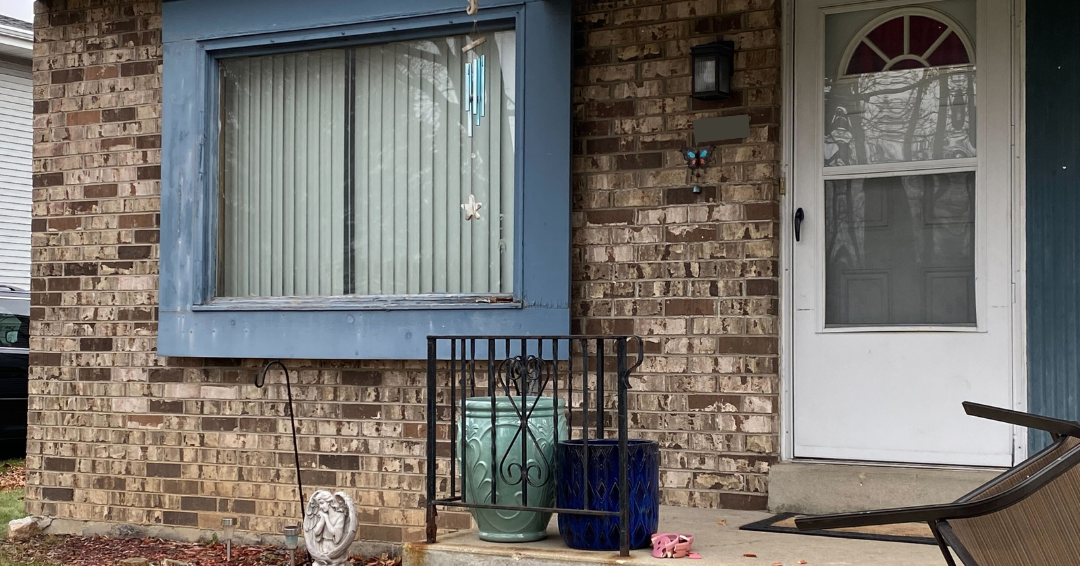
The home of the boy and mother.

Due to his age, the boy was allowed to remain with his family. However, the following day, the family contacted the Milwaukee Police Department with “serious concerns.”

The complaint says the boy’s 26-year-old sister told detectives he has had “rage issues” all of his life and “five different imaginary people that talk to him.”

A therapist previously gave the boy a “concerning diagnosis” and the mother had placed cameras inside the home to watch him, according to the complaint. Two weeks prior to the woman’s murder, “someone had unplugged these cameras.”

The sister also told detectives she learned that the morning after their mother’s death, the boy logged onto their mother’s Amazon account and ordered an Oculus Virtual Reality Headset.

The complaint says a family member also alleged that the boy would pick their puppy up by the tail and “swing the puppy around until it whined and howled in pain.” This occurred when the boy was allegedly four-years-old.

An aunt told detectives that the boy never cried or showed remorse following his mother’s death. The complaint alleges the 10-year-old told his aunt that he was “actually aiming the gun at his mother.” The day after his mother’s death, the aunt said he apologized for killing his mom and then asked if his Amazon package arrived.

Untitled design (31).png

TMJ4

The home of the boy and mother.

In a second interview with detectives, the boy allegedly admitted he retrieved the gun because he was mad at her for waking him up early and not letting him get something on Amazon. He told detectives his mom walked in front of him when he tried to shoot the wall to “scare her.” The complaint also says he admitted to getting his mother’s keys for the gun lock box the night before.

Neighbors described the family as average. Steve Frisch has lived near 87th and Hemlock for more than two decades. His quiet neighborhood was shaken up last week when police arrested the 10-year-old.

“Still surprised when there’s a shooting around, (it is)usually (a) quiet neighborhood,” Frisch said. “(The family) just asked me how I’m doing and stuff like that.”

Wednesday morning, TMJ4 News asked Milwaukee Mayor Cavalier Johnson about the charges the 10-year-old is facing.

“Anytime there is a crime in the city, whether it’s by a 10-year-old or someone much older, it’s concerning,” Mayor Johnson said. “I don’t want people getting hurt. As for this case, I’m just learning about it. I got the details this morning.”

The 10-year-old has been charged with first-degree reckless homicide. If convicted, he faces a maximum of 60 years in prison.

He had his initial appearance in court on Friday and a cash bond of $50,000 was set. He will appear in court for a status hearing on Dec. 7.

TMJ4 News is choosing not to name the suspect at this time due to his age. Read our ‘Moving Forward’ policy here. In Wisconsin, you can be charged as an adult if you are 17 years and older. To charge someone younger than 17 is rare – and 10 years old practically unheard of.


It’s about time to watch on your time. Stream local news and weather 24/7 by searching for “TMJ4” on your device.

Available for download on Roku, Apple TV, Amazon Fire TV, and more.


Report a typo or error // Submit a news tip

The post Child charged as an adult for fatally shooting mother after becoming upset over VR headset appeared first on newsfox1188.com.


source https://newsfox1188.com/child-charged-as-an-adult-for-fatally-shooting-mother-after-becoming-upset-over-vr-headset/?utm_source=rss&utm_medium=rss&utm_campaign=child-charged-as-an-adult-for-fatally-shooting-mother-after-becoming-upset-over-vr-headset

Thursday, January 11, 2024

The Secret Illness: Understanding Lloyd Austin’s Hidden Diagnosis and the Reasons Some Keep Serious Illnesses Private

The U.S. defense secretary is facing scrutiny after failing to immediately disclose to the White House his recent prostate-cancer diagnosis and a related hospitalization, a breach of protocol for which he has apologized.

But while the secretary, Lloyd J. Austin III, as a cabinet member, faces certain expectations about what he must disclose publicly regarding his health, and when he should do it, mental health experts who work with patients who have serious illnesses, such as cancer, say that reticence is common — even in the era of oversharing online.

“I see it with my patients all the time,” said Dr. Andrew Esch, senior education adviser at the Center to Advance Palliative Care, a national health care advocacy organization based in New York City. “It’s very human to not want to have yourself sort of flayed open for the world to see.”

There are many reasons people might opt to keep their illness to themselves in certain contexts, experts said, but some are more common than others. Privacy can be a coping strategy, said Dr. Itai Danovitch, chairman of the department of psychiatry and behavioral neurosciences at Cedars-Sinai in Los Angeles, particularly in the early days following a diagnosis, when patients are deluged with new information.

“There are different strategies we use to try and control things that are uncontrollable,” he explained. “One common mechanism that we use is to compartmentalize.” Though compartmentalization, or keeping certain thoughts and emotions separate, is often maligned, it is adaptive, Dr. Danovitch said. For instance, it can help people to stay focused professionally even when illness is causing significant stress.

Dr. Danovitch cautioned, however, that if the compartments became too “deep and separated,” they could prevent people from getting necessary treatment. He offered the example of a patient who does not get follow-up testing on a suspicious lump because it is too stressful.

Others may struggle with how vulnerable it feels to reveal an illness, said Steven Meyers, a professor and chair of the psychology department at Roosevelt University in Chicago. They may find that there is a stigma attached to their diagnosis that will leave them open to pity.

“Some people view being healthy and physically capable as being very central to their role or their identity,” he said. “Those people will have a lot more difficulty in publicly acknowledging feeling diminished in their estimation. Those people will also be much more concerned with being a burden to others.”

Mr. Austin, on the other hand, who is 70 years old, is “fiercely private.”

Though the experts were reluctant to prescribe circumstances under which anyone “should” share, they said certain factors could help influence the decision. Some powerful arguments for disclosing a medical condition are tied to protecting your own health.

“I always validate a person’s desire for privacy, whatever their reasons,” Dr. Fann said. “But I also explain that keeping their diagnosis fully secret, or not being able to talk about it, may actually make it harder for them to ask for help when it’s needed — very concretely, getting a ride to treatment or getting a sympathetic ear when you’re stressed.”

Remaining tight-lipped can also lead to social isolation.

“Loneliness has a profound impact on how well a patient can live with whatever illness they’re living with,” Dr. Esch said. “The burden of secrecy really contributes to a lot of stress, a lot of anxiety, and depression.

But another consideration, in addition to how keeping an illness private might affect personal well-being, is other people’s right to know, Dr. Meyers said, which is not absolute.

“Not everybody has to know all the details of anybody’s confidential medical condition,” he said. You might reveal an illness to a friend, but not go into the details of your treatment; or you might talk to your employer about a life-changing diagnosis, but only once you have had some time to discuss the long-term plan with your doctor. (Generally speaking, most employees are not required to share personal health information.)

Dr. Meyers recommends asking yourself: Is the person a “stakeholder” when it comes to your life and your well-being or merely a “spectator”? Spectators do not have much of a “right to know,” he said, whereas stakeholders will be affected, and that should be considered.

In other words, you might want to tell your immediate family about a diagnosis, but not your whole social network.

“For those who are fortunate to have other people in their work lives and personal lives who would provide support, assistance and care, disclosure could be something quite positive,” Dr. Meyers said. “But each individual really has to assess the psychological safety and the practicalities of being vulnerable.”

The post The Secret Illness: Understanding Lloyd Austin’s Hidden Diagnosis and the Reasons Some Keep Serious Illnesses Private appeared first on newsfox1188.com.


source https://newsfox1188.com/the-secret-illness-understanding-lloyd-austins-hidden-diagnosis-and-the-reasons-some-keep-serious-illnesses-private/?utm_source=rss&utm_medium=rss&utm_campaign=the-secret-illness-understanding-lloyd-austins-hidden-diagnosis-and-the-reasons-some-keep-serious-illnesses-private

Protecting Your Cryptocurrency from Hackers in 2023: A Guide

HOW TO PROTECT CRYPTOCURRENCY FROM HACKERS IN 2023 HOW TO PROTECT CRYPTOCURRENCY | Let’s learn how to take precautions from crypto scamme...